Amazing Tortoises
Amazing Tortoises is a non-profit tortoise care project dedicated to educating, encouraging, and empowering both current and aspiring owners of the Greek tortoise - also known as the spur-thighed tortoise or scientifically as Testudo graeca.
We’re not only committed to improving the lives of pet tortoises - we also aim to raise awareness and contribute to the conservation of this remarkable species.
Join us in protecting the world of tortoises.
Our Purpose is Protection
Sharing
knowledge &
experiences
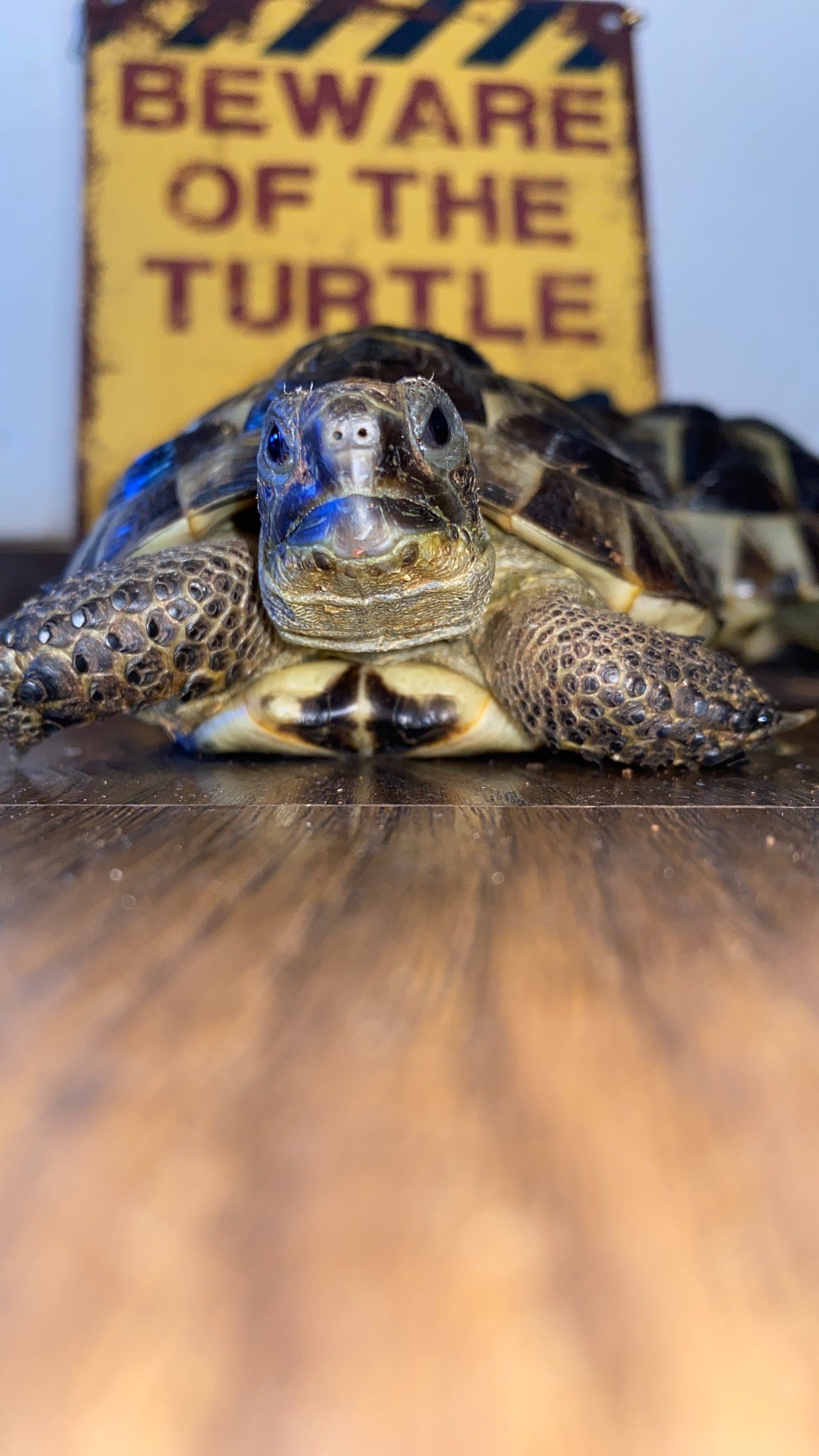
Welcome to our delightful journey with female Pink and male Blue, the amazing Greek tortoises (Testudo graeca).
Here, you'll discover everything you need to know about caring for these charming creatures, from their diet to their habitat.
This medium-sized, herbivorous species is primarily found in the Mediterranean region. It's known for its impressive longevity, with lifespans often exceeding 100 years, and anecdotal reports suggesting some individuals may live over 125 years. The species is characterized by the spurs on its thighs and the distinct patterns on its shell.
As passionate caretakers, we’re not only committed to improving the lives of pet tortoises - we also hope to raise awareness and contribute to the conservation of this remarkable species.
We understand that caring for tortoises can be challenging, which is why we aim to share our knowledge and experiences - to help make your journey smoother and your beloved tortoise as happy as possible. Follow their TikTok for fun updates as we document their lives from birth.
Join us as we navigate the world of tortoise care and work to protect these amazing creatures together.
Sunlight
natural &
artificial
Why UVB and UVA
Matters?
The phrase "tortoises are children of the sun" beautifully captures how essential sunlight is to their health. It supports shell development, bone strength, digestion, healthy appetite, and energy levels.
Here’s why sunlight matters for tortoises:
UVB - Vitamin D3 Production, Calcium Absorption and Strong Shell
Tortoises, like other reptiles, need exposure to UVB rays from the sun to produce vitamin D3 in their skin. Vitamin D3 is crucial because it enables them to absorb calcium from their food - a mineral vital for building and maintaining a strong shell and healthy bones. Without enough vitamin D3, calcium cannot be properly absorbed, increasing the risk of Metabolic Bone Disease (MBD). This condition can lead to soft or deformed shells, weak bones, and serious health problems.
While high-quality UVB lamps can replicate some of the sun’s benefits, natural sunlight remains the gold standard. It provides a full spectrum of light and encourages more natural behaviors. Still, artificial lighting is a valuable tool when outdoor exposure isn’t possible. In indoor enclosures, UVB lamps are necessary. Their bulbs should be replaced every 6 - 12 months, as their output diminishes over time. UVB lights provide ultraviolet B radiation, but they don’t usually produce significant heat.
Tortoises need a separate heat source - a second lamp for basking - to create a proper temperature gradient within their enclosure.
UVA - Thermoregulation and Basking
Being cold-blooded (ectothermic), tortoises depend on external heat sources to regulate their body temperature. Basking in the sun helps them warm up, and also supports their activity levels and digestion. UVA light plays a key role in regulating their circadian rhythms, stimulating natural behaviors like feeding, movement, and mating.
Without adequate UVA exposure, tortoises may become lethargic and lose their appetite. Testudo graeca can instinctively begin the process of preparing for hibernation when temperatures drop below 10°C (50°F).
In indoor enclosures, UVA lamps are essential. The target basking temperature for Testudo graeca is 32-36 °C (90-96.8 °F). Although Greek tortoises benefit from warmth and sunlight, they also need shade and cooler areas to avoid overheating. The far end of the enclosure should offer a sheltered retreat zone with temperatures around 22-24 °C (72-75 °F). Artificial lighting should follow a cycle that mimics natural daylight - typically 10-12 hours on, followed by 10-12 hours off.
Tortoises need darkness at night to rest properly and regulate their biological rhythms. A natural nighttime temperature drop is healthy, typically between 16-22 °C (60-72 °F). No additional heat is usually needed at night, as long as the room stays above 16 °C (60 °F).
What light to use for Greek tortoise?
Arcadia, Zoo Med, and Exo Terra are among the most trusted brands for reptile lighting - used by many experienced keepers and veterinary clinics. Always choose your bulb based on your tortoise’s size, the room temperature, the dimensions of the enclosure, and the distance between the bulb and your tortoise’s shell.
UVB setup - Testudo graeca are a Mediterranean species and require less intense UVB than desert species. When it comes to UVB for Greek tortoises, less is more. Too much UVB can cause skin and eye damage - even blindness. We use the Exo Terra Glow Light Large Porcelain Lamp because it clips easily to glass enclosures and is long enough to cover the whole bulb Zoo Med Reptisun 5.0 compact fluorescent 26W.
UVA setup - we use the Exo Terra Glow Light Small, paired with the Zoo Med Repti Basking Spot 60W bulb.
“Tortoises are ancient creatures,
and their longevity can be seen as
a symbol of wisdom and resilience.”
Food & Hydration
At our establishment, we believe that a fresh and nutritious diet is essential for the well-being of our animals. Since birth, they have been accustomed to a diet in fresh foods only, including daily servings of napa cabbage, valerianella locusta, arugula, radish leaves, clover and dandelion which has high potassium levels.
As a special treat, we occasionally offer rose petals, violets and strawberries to add variety and enjoyment to their diet. Interesting fact, tortoises can eat cactus, particularly Testudo graeca can eat prickly pear cactus (spines have to be removed before feeding) and provide essential nutrients like fiber and calcium. For a calcium boost, we use also Arcadia Earth Pro CalciumPro-Mg.
To support hydration we feed them in moderation with aloe, succulent plants or watermelon which contain high water content. Twice a day we serve our tortoises fresh food and water for drinking in shallow and heavy bowls that are easy for the tortoises to access and won't easily tip over. Tortoises could drown in high water. To hydrate a tortoise, provide regular soaks in shallow, lukewarm water 2-3 times per week for 15 minutes, ensuring the water level is just below the plastron (the bottom shell).
During warmer months, daily baths may be necessary to prevent dehydration. Use only fresh water and do not add detergents of any kind. Tortoise baths stimulate digestion, bowel movement and waste elimination. After the bath gently dry the tortoise. Never polish/shine a tortoise's shell with oil or shell conditioners as they will clog up the pores. Tortoise shells are porous and need to breathe to stay healthy.
To ensure the food we offer is safe, we refer to The Tortoise Table, a helpful resource - though it is primarily geared toward Chelonians and may not fully apply to Testudo graeca.
Our commitment to mindful high-quality feeding plays an important role in supporting tortoises overall health and happiness.
Habitat
indoor &
outdoor
Our Setup
Every tortoise needs space to roam, so we make sure their enclosures - indoors and out - are as large and enriching as possible. Provide hiding places like half-logs, caves, or other shelters to allow the tortoise to feel secure.
Our setup includes safe plants to eat and rocks to create a stimulating environment supporting their natural behaviors, encourages healthy movement, and helps them live happy, active lives.
We use shallow but heavy bowls for food and water that are easy for the tortoise to access and won't easily tip over.
Outdoor: Since we live in four seasons country during warm summer days, we give our Testudo graeca tortoises plenty of time outdoors in escape-proof enclosures where they can bask in natural sunlight, explore, and eat fresh clover. Outdoor enclosure needs to be secure, with walls tall enough to prevent climbing and a barrier to prevent digging underneath. Keep the enclosure away from potential hazards like other animals or toxic plants.
Indoor: At night and during the cooler parts of the year, our tortoises are kept indoors, where we carefully replicate natural sunlight using two lamps that provide both UVB and UVA light. This ensures they still receive the essential benefits of sunlight, even when they can't be outside. It is recommended to use thermometer and hygrometer to monitoring temperature and humidity levels. A safe and suitable substrate include coconut fiber and sand.
“Try to be like the tortoise -
at ease in your own shell.”
Male & Female
In many tortoise species, the sex of the offspring is determined by the temperature at which the eggs are incubated. Higher temperatures typically produce females, while lower temperatures produce males.
I have both Greek tortoises since birth, one female Pink and one male Blue. It is not possible to visually determine the sex of a baby tortoise at birth or in early childhood.
Testudo graeca can be differentiated primarily related to size, tail length, and plastron shape. Males tend to be smaller with longer, thicker tails, and a concave plastron. Females are generally larger, with shorter tails and a flat plastron.
Sexual maturity in Testudo graeca is more related to size than age.
Male Greek tortoises (Testudo graeca) may bite females during courtship as part of their mating behavior. This behavior is often accompanied by other actions like circling, ramming, and attempting to mount the female. The bites are typically directed at the female's limbs. Although biting is normal, excessive biting or aggression, especially if the male is overly persistent, could cause injury to the female.
If the biting behavior becomes too aggressive, or if the female shows signs of stress, separating the tortoises might be necessary. Which happened to be our case so we ended up having two separate enclosures and put them together only under supervision. It is recommended to give more space to female.

Support Amazing Tortoises
We are grateful for any support that helps us care for tortoises and improve their lives.